ANWB Paddenstoel 🍄
How a brutalist mushroom withstood the test of time.
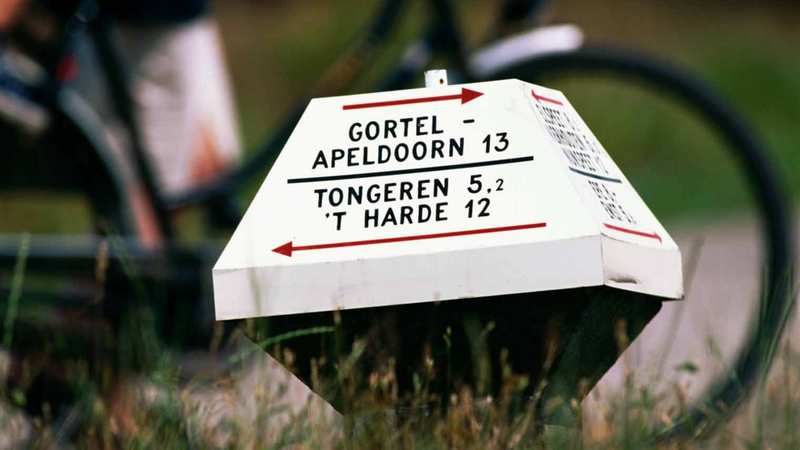
How a brutalist mushroom withstood the test of time.
In 1919, the Algemene Nederlandsche Wielrijders Bond (Royal Dutch Touring Club) put the first of many “paddenstoelen” (mushrooms) along a bike path in the Netherlands.
At the time there were about a million bicycles in the Netherlands—or roughly 14 bikes for every 100 citizens. The Dutch cycling culture was starting to take off.

For the Dutch population data: Gapminder - Population v7 (2022); Gapminder - Systema Globalis (2022); HYDE (2017); United Nations - World Population Prospects (2022) – with major processing by Our World in Data. “Population” [dataset]. Gapminder, “Population v7”; Gapminder, “Systema Globalis”; PBL Netherlands Environmental Assessment Agency, “HYDE 3.2”; United Nations, “World Population Prospects” [original data]. Retrieved February 1, 2024 from https://ourworldindata.org/grapher/population
Bicycles throughout the years manually collected from this Wikipedia article .
Existing signposts were made out of steel, which was scarce and expensive after World War I. In addition, the ANWB felt that the existing, man-high signposts were an eyesore, so they asked board member and architect J.W.H. Leliman to come up with a new design in concrete.
A few prototypes were tested in the winter of 1919, and the first twelve mushrooms were planted in the summer of that year.
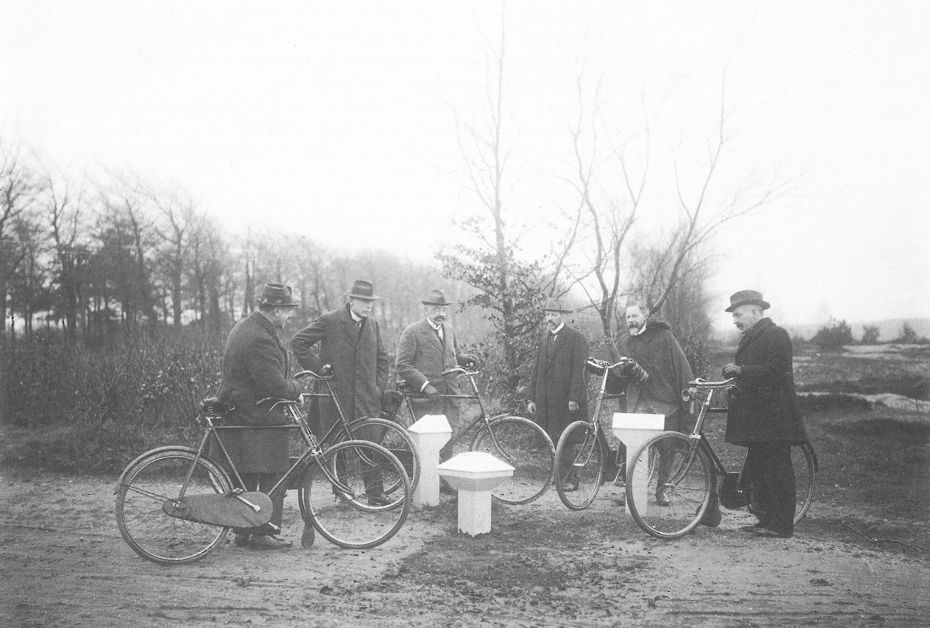
The first iteration was a fully concrete post with directions on wooden slats affixed to it. Heavy and prone to vandalism. So in 1927, the ANWB piloted a version with a steel hood. Next, they got rid of the concrete underneath the hood, reducing the mushroom’s weight from 145 to 80kg. Nice. But the slanted sides remained vulnerable to cyclists' feet.
Interestingly, the ANWB held a design contest in 1942, asking its members for ideas. I have to assume this was before July of that year, because that's when the Germans started confiscating bicycles en mass—the number of bicycles decreased from 4 to 2 million between 1940 and 1945. Still, there were 222 submissions. A popular suggestion was to get rid of the slanted sides and make them perpendicular. That’ll teach those who feel the need to put their feet on our beautiful mushrooms! At this point I have to wonder whether the ANWB involved Leliman, the original designer, to evaluate this idea.
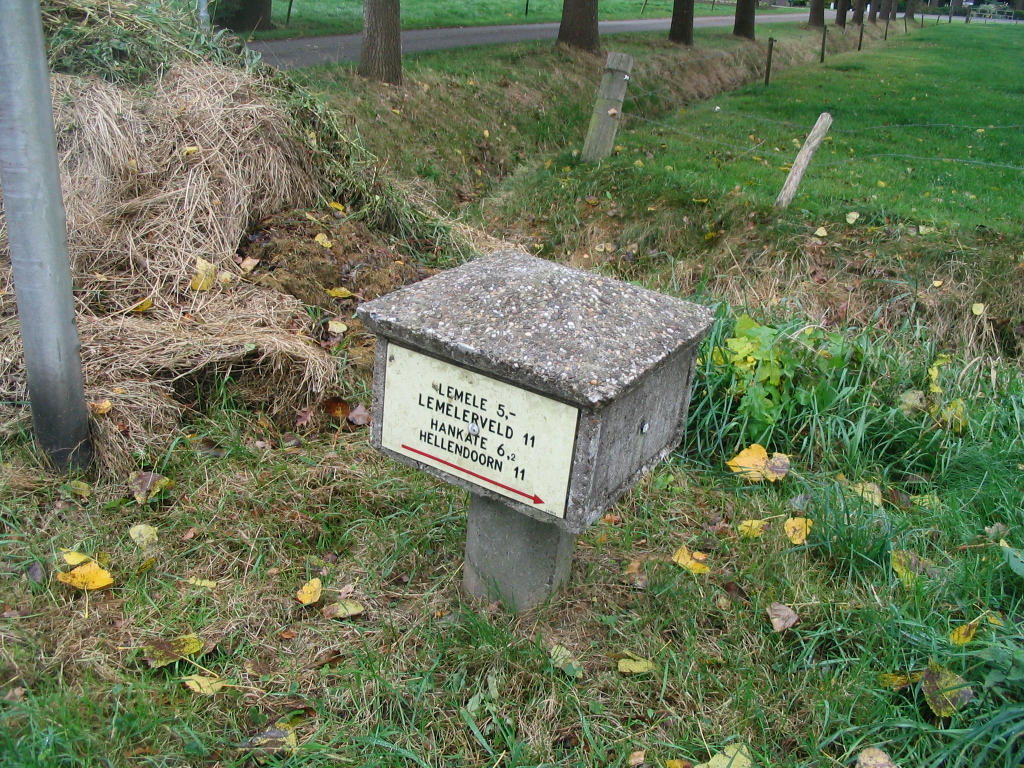
Anyway, the winning idea monstrosity was implemented post WWII. And this is where I’ll drop a Neil Gaiman quote that illustrates the value of a good designer:
“Remember: when people tell you something’s wrong or doesn’t work for them, they’re almost always right. When they tell you exactly what they think is wrong and how to fix it, they are almost always wrong.”—Neil Gaiman
Paraphrased: listen to your users, don’t do as they say; the 90 degree angle made it much harder to read the directions on the mushroom.
In 1955, the ANWB realized its mistake, and returned to the original design with the slanted faces. The metal hood became a nice polyester hood (yes, plastics aren't all bad), and in 2003 the mushroom inverted its hood colors, taking on an even more classic fairytale appearance.
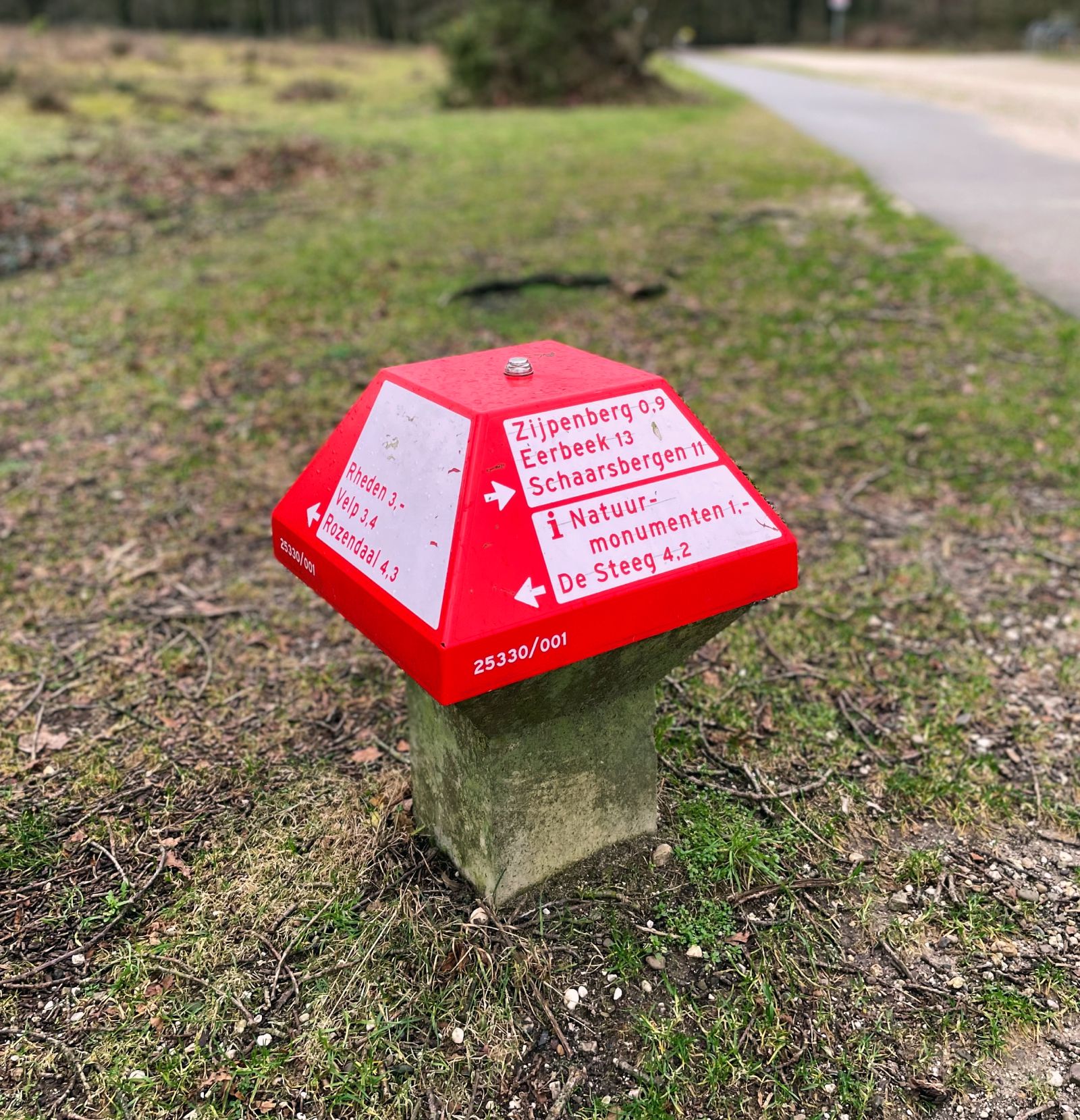
The design of the ANWB Paddenstoel has withstood the test of time. That in itself is impressive.
It’s a weird mixture of helpful, friendly and harsh, brutalist. ...exposed, unpainted concrete or brick, angular geometric shapes
are trademarks of brutalist architecture. The mushroom was designed by an architect. You can see where this is going: the Dutch architect J.W.H. Leliman was the father of brutalism, 30 years before it became a thing.
If you think that’s a stretch, just look at the Delft University of Technology auditorium, one of the pinnacles of brutalist architecture:
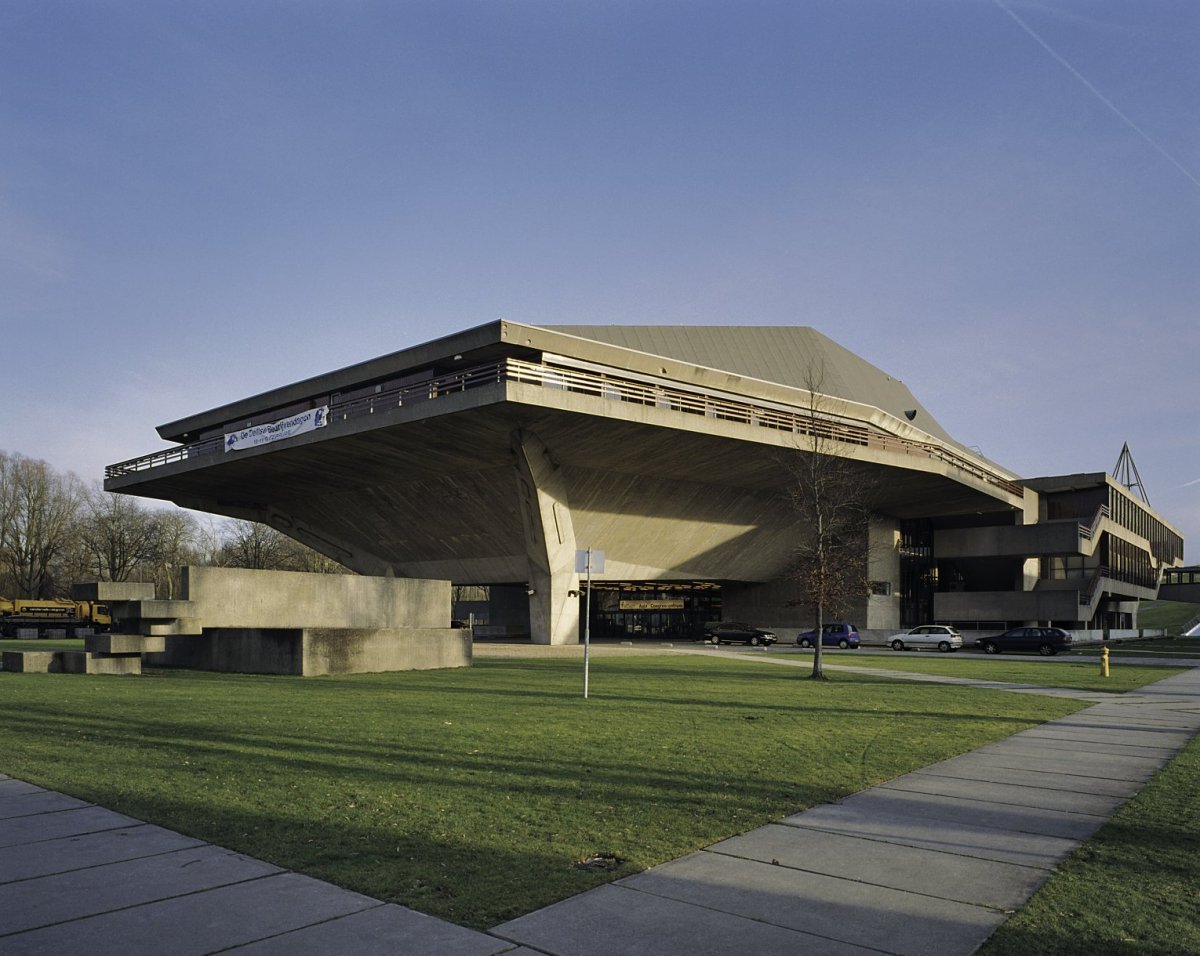
The resemblance is striking.